Home // News // Which tooth first? Treatment planning a mouth full of cracked and weak teeth
// News

Which tooth first? Treatment planning a mouth full of cracked and weak teeth

24th September 2026 // by Amber Aplin

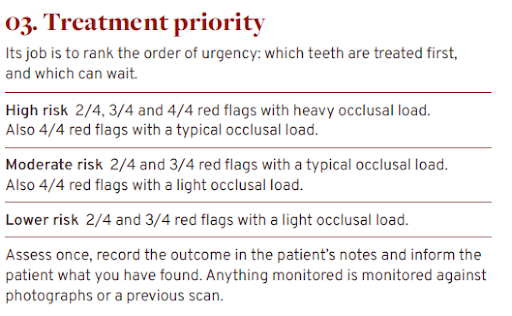
According to the flowchart, the first thing we’d treat is caries or pulpitis, but as he was a new patient who hadn’t been to a dentist for years, we agreed to start with the single broken tooth as a way to ease back into treatment and then treat the lower left molars.
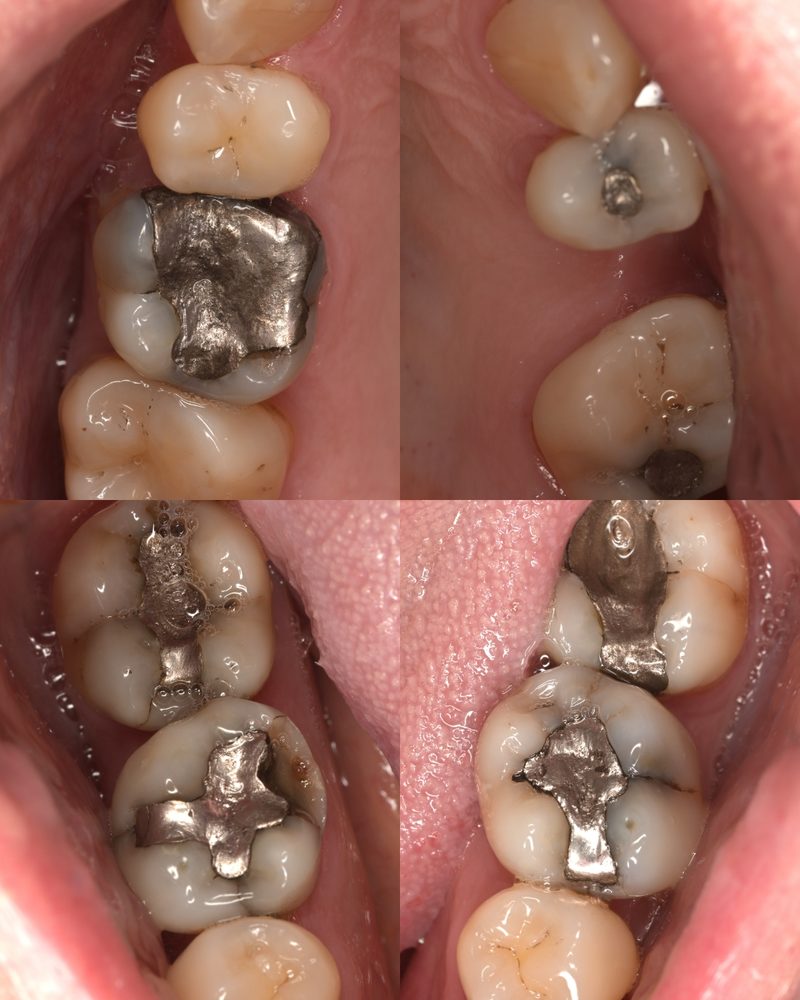
Diagnoses

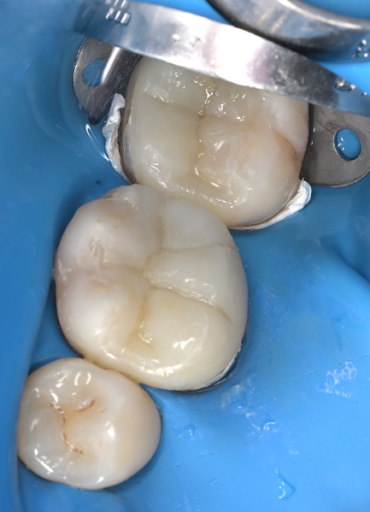
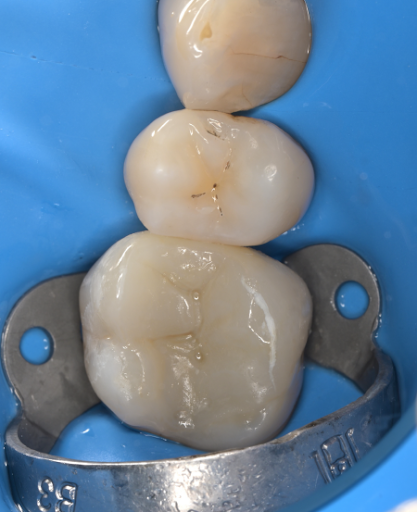
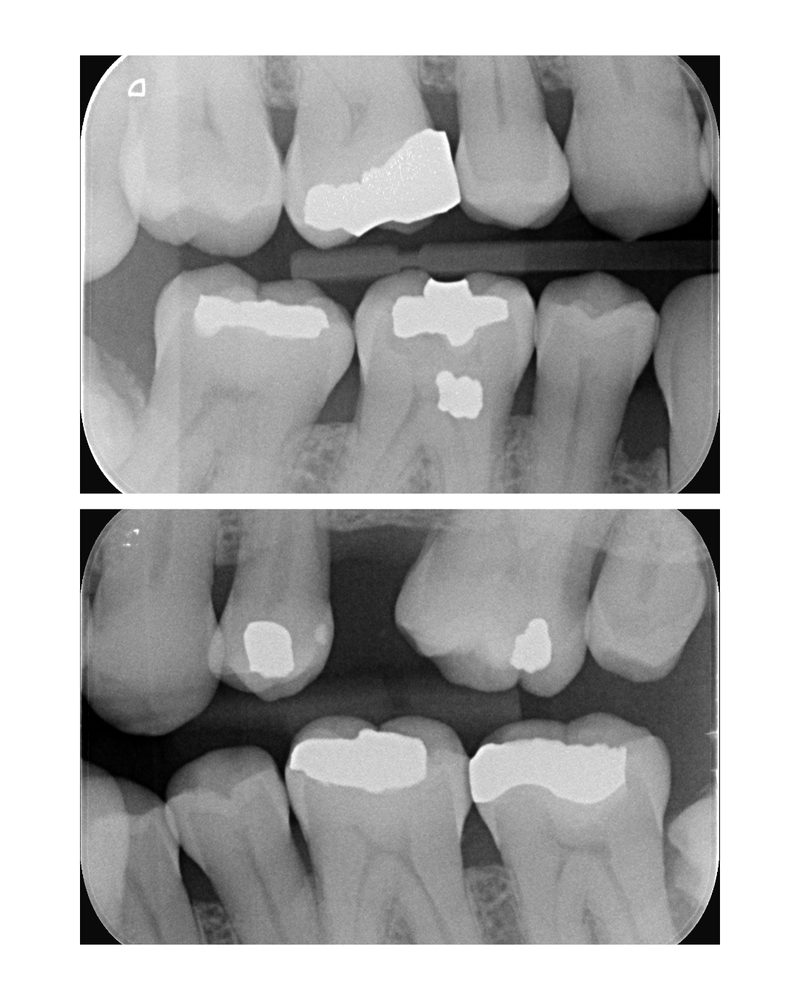
Fractured 46 due to horizontal structural compromise.

Reversible pulpitis 37 and/or 36 due to horizontal structural compromise secondary to likely cracks or secondary caries.

Other SC teeth at high risk of cracks and caries: 16 and 47.

Initial treatment Plan

We agreed to reinforce and protect the 46 first, and then the lower left molars, followed by the other SC teeth.

But which order?
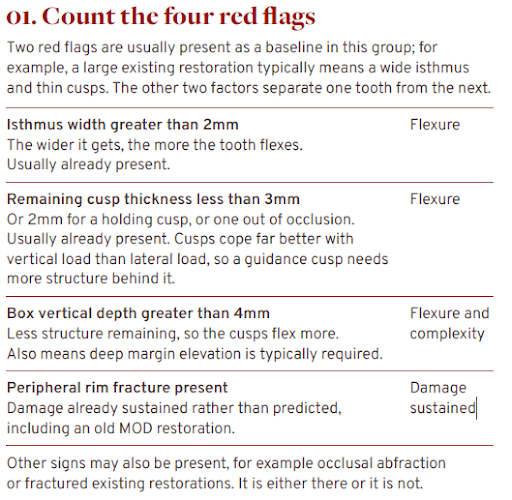
  • 46: filling > 2mm, cusps <3mm, cracks: yes, and depth <4mm [3/4 red flags + a typical occlusion]
  • 37: filling > 2mm, cusps <3mm, cracks: yes, and depth <4mm [3/4 red flags + a heavy occlusion]
  • 36: filling > 2mm, cusps <3mm, cracks: yes, and depth <4mm [3/4 red flags + a typical occlusion]
  • 47: filling > 2mm, cusps >3mm, cracks: yes, and depth <4mm [2/4 red flags + a heavy occlusion]
  • 16: filling > 2mm, cusps <3mm, cracks: yes, and depth >4mm [4/4 red flags + a typical occlusion]
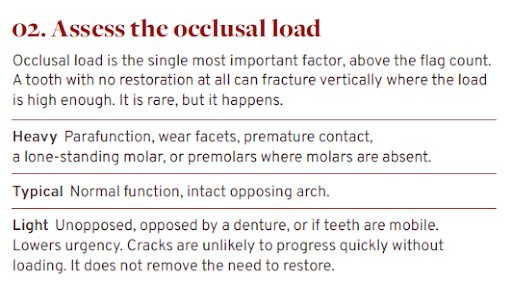
The guide put 37, 47 and 16 in the high-risk group. The 36 and 46 were moderate risk on paper, but as the 46 had already broken, and he’d been away from the dentist for ten years, we agreed to start there as a gentle first appointment. The 37 and 36 were causing his symptoms, so they were planned next. That left the 16, which was high risk but not bothering him, until last. All the appointments were completed within two months.

Definitive treatment plan

  1. 46 onlay (prep carried out, and as patient coped well with treatment, he agreed to book the tooth behind soon, so both onlays could be fitted together)
  2. 47 onlay 
  3. 37 & 36 onlay preparations
  4. 16 onlay

Due to all teeth being pretty damaged, the restorative decisions were straightforward – so we just picked the ones bothering the patient first and completed the restorations in a logical order.

In case you’d like to see the finished result:
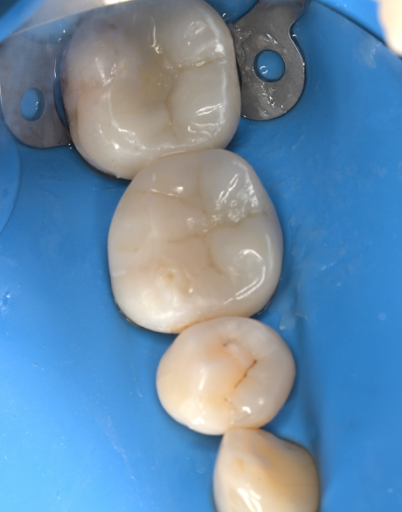
Any questions? Get in touch! Thanks, Amber

Amber Aplin

About Amber

Dr Amber Aplin is a dentist, educator, and founder of The Gentle Touch in Kelso, Scotland. She teaches biomimetic dentistry and therapist-led care to practices across the UK.

Read Amber's full story

You may also like

Stay close to the conversation

Amber writes The Bulletin, a fortnightly update on biomimetic dentistry, therapist-led care and practice transformation. Subscribe and receive a free download: Amber's framework for working through a whole mouth of restored teeth. Which to treat, in what order, and what to recommend for each.

Please select all the ways you would like to hear from Amber Aplin Dental:

You can unsubscribe at any time by clicking the link in the footer of our emails. For information about our privacy practices, please visit our website.

We use Mailchimp as our marketing platform. By clicking below to subscribe, you acknowledge that your information will be transferred to Mailchimp for processing. Learn more about Mailchimp's privacy practices.

This website uses cookies
This site uses cookies to enhance your browsing experience. We use necessary cookies to make sure that our website works. We’d also like to set analytics cookies that help us make improvements by measuring how you use the site. By clicking “Allow All”, you agree to the storing of cookies on your device to enhance site navigation, analyse site usage, and assist in our marketing efforts.
These cookies are required for basic functionalities such as accessing secure areas of the website, remembering previous actions and facilitating the proper display of the website. Necessary cookies are often exempt from requiring user consent as they do not collect personal data and are crucial for the website to perform its core functions.
A “preferences” cookie is used to remember user preferences and settings on a website. These cookies enhance the user experience by allowing the website to remember choices such as language preferences, font size, layout customization, and other similar settings. Preference cookies are not strictly necessary for the basic functioning of the website but contribute to a more personalised and convenient browsing experience for users.
A “statistics” cookie typically refers to cookies that are used to collect anonymous data about how visitors interact with a website. These cookies help website owners understand how users navigate their site, which pages are most frequently visited, how long users spend on each page, and similar metrics. The data collected by statistics cookies is aggregated and anonymized, meaning it does not contain personally identifiable information (PII).
Marketing cookies are used to track user behaviour across websites, allowing advertisers to deliver targeted advertisements based on the user’s interests and preferences. These cookies collect data such as browsing history and interactions with ads to create user profiles. While essential for effective online advertising, obtaining user consent is crucial to comply with privacy regulations.