Why is a class II so hard?
For years I thought of a class II as a bread-and-butter filling. Half an hour, matrix on, a few increments, done. I’d have been slightly offended if you’d told me it was one of the most technique-sensitive things booked in.
It is, however (within the realms of restorative dentistry). It’s also why I don’t like saying that dental therapists do the more straightforward dentistry…. and us dentists do the complex stuff. It’s simply not true. I’d argue that an onlay prep is far more straightforward than an ‘MOD’ composite resin. At least the GDC scope is moving in the right direction. But that discussion is for another day.
Every difficult part of adhesive dentistry can reveal itself in one small box. Here’s why.
1. Isolation
A deep box can be one of the most difficult parts to isolate. Rubber dam is non-negotiable (inverting the frame gives extra gingival retraction, as Browet and Gerdolle (2017) describe), but getting a clean, dry deep box area with the dam securely in place takes time.
Contaminate the margin and the bond is compromised before you start.
2. Humans can’t detect caries
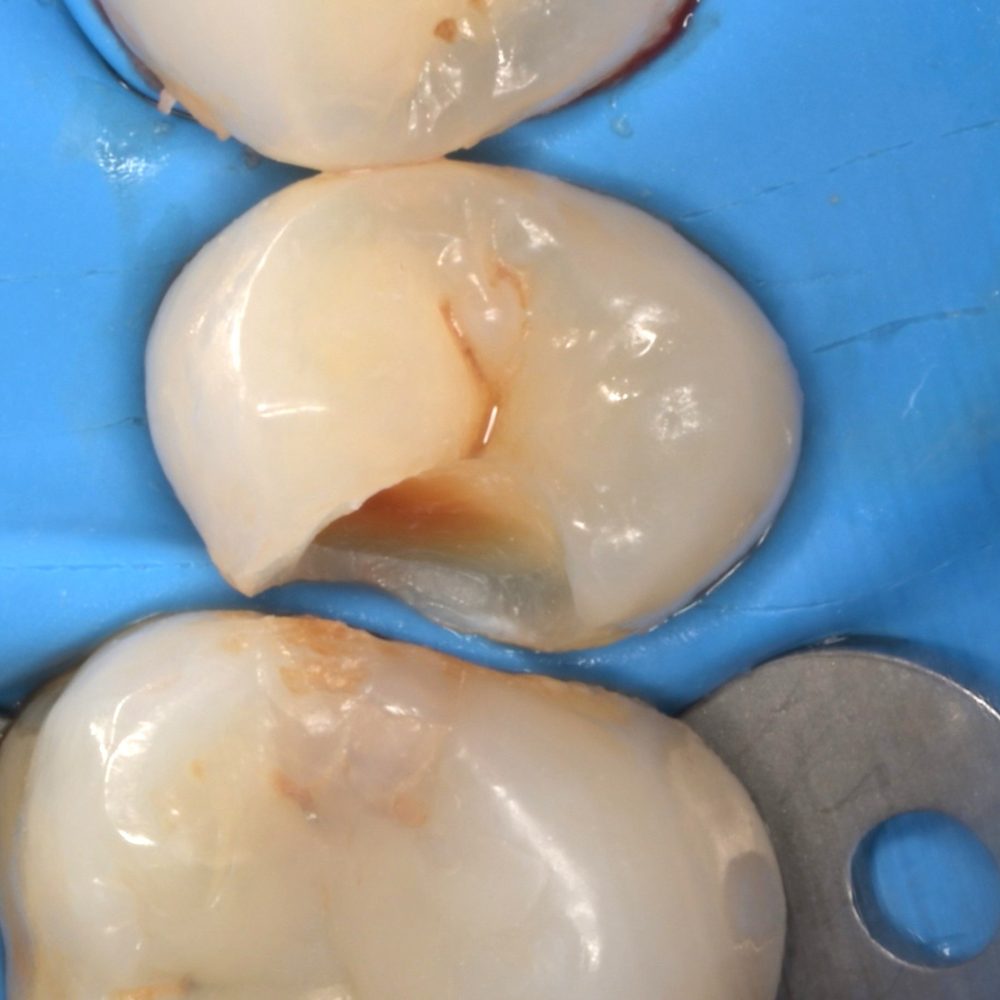
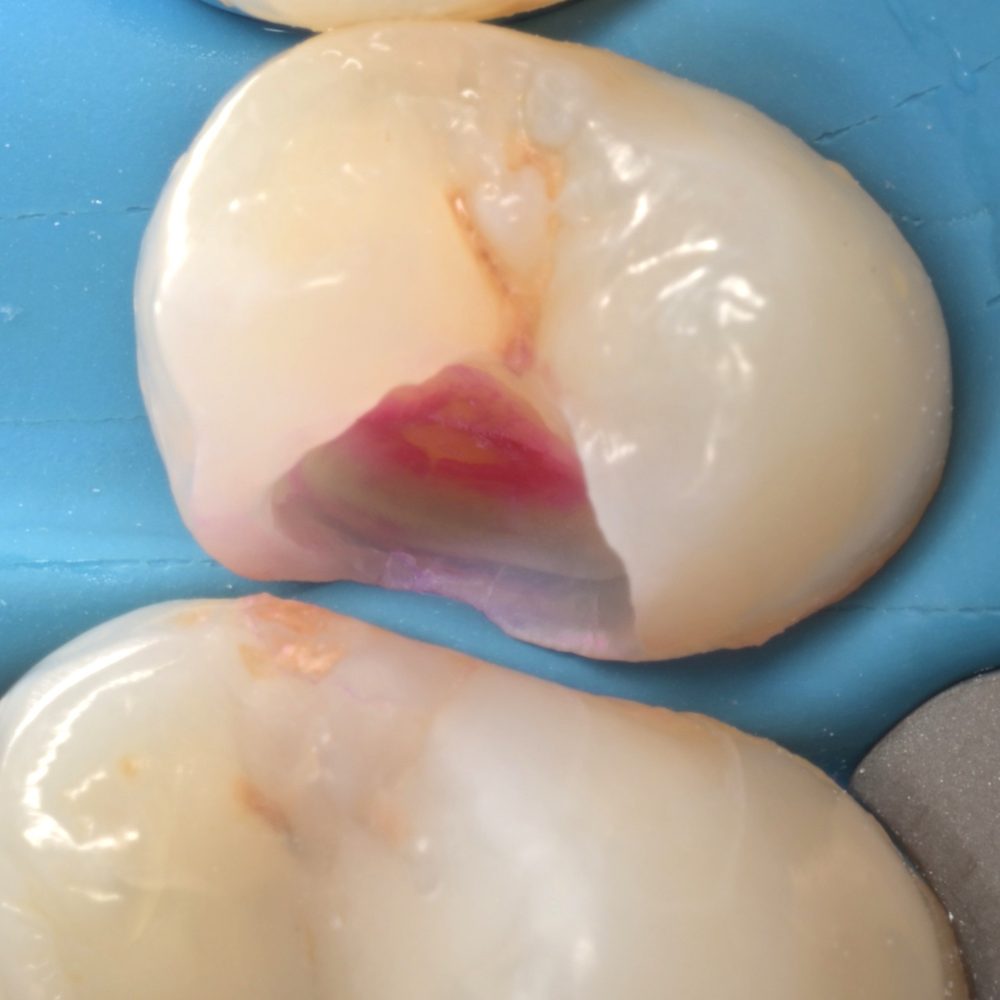
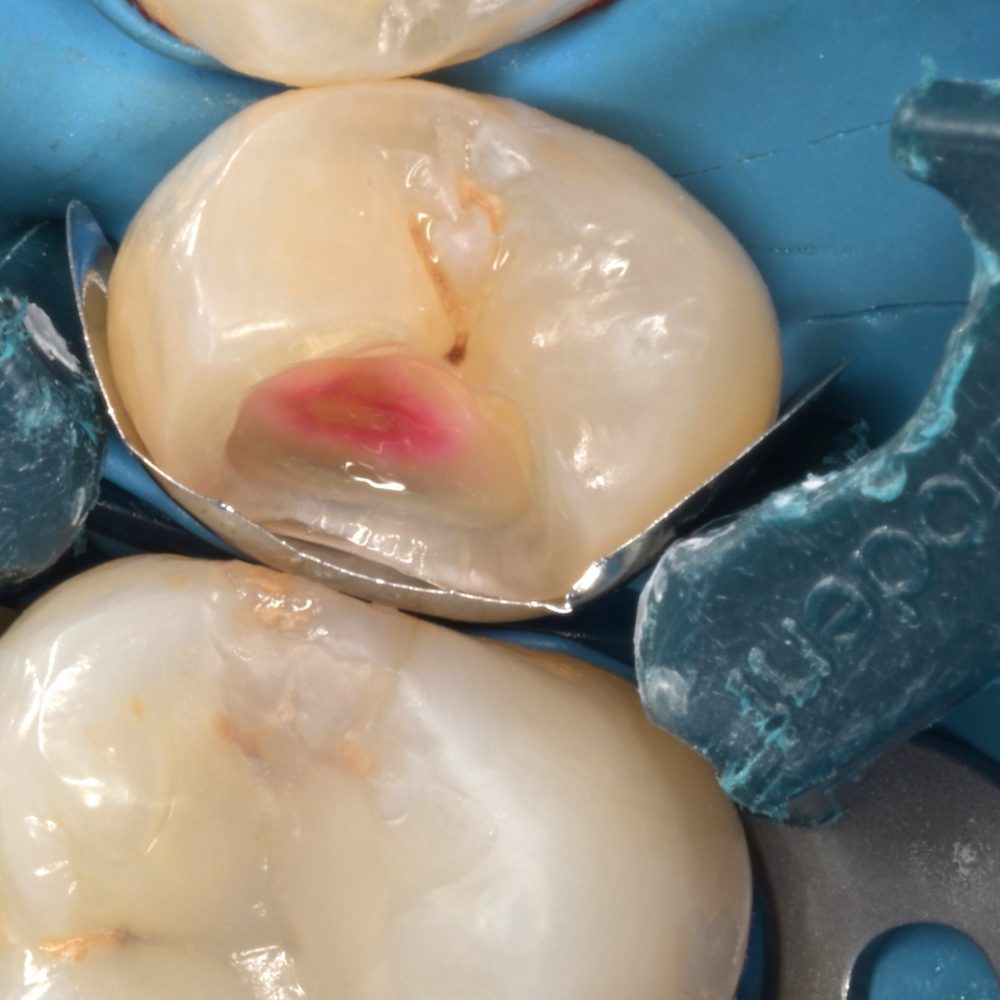
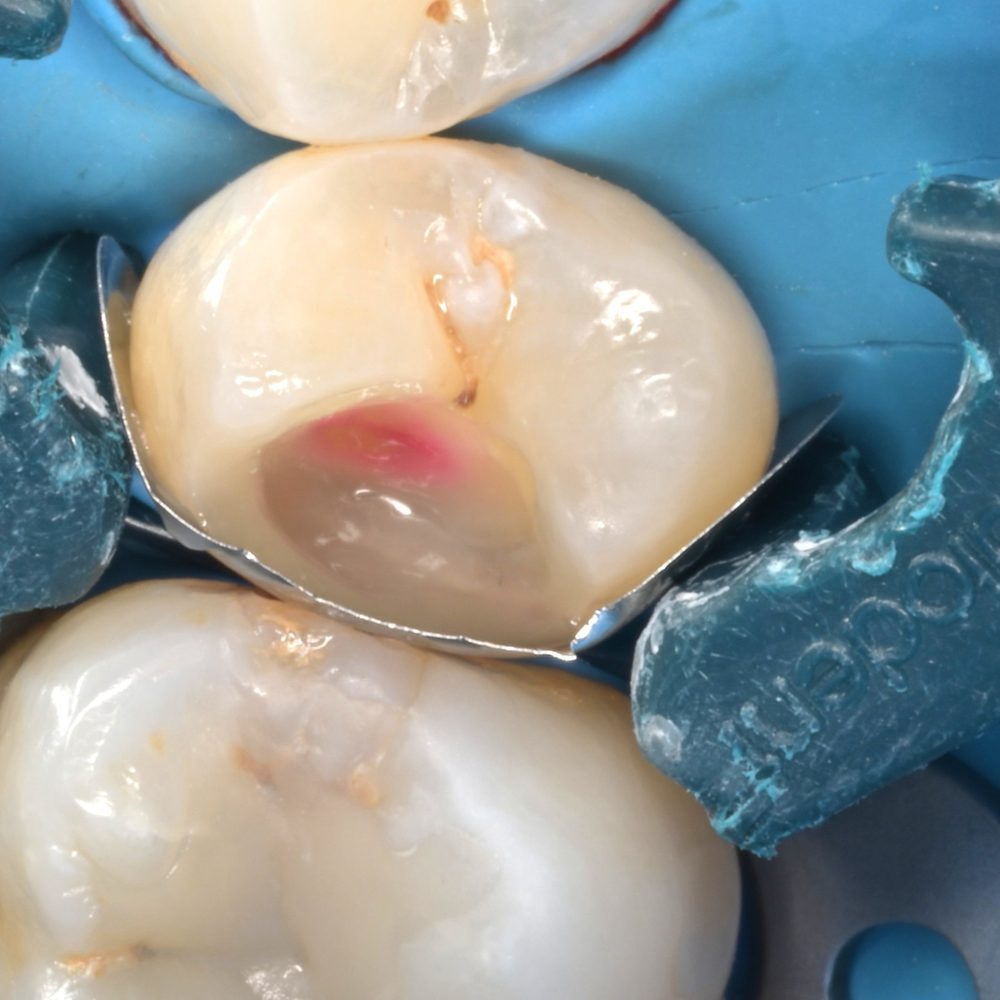
I’m constantly surprised with the amount of caries in a cavity once I think I’ve removed it all. Caries detector dye is the objective way to confirm a cavity is caries-free. With carious- affected dentine having a much lower bond strength, we need to know what we’re dealing with to optimise bond strengths.
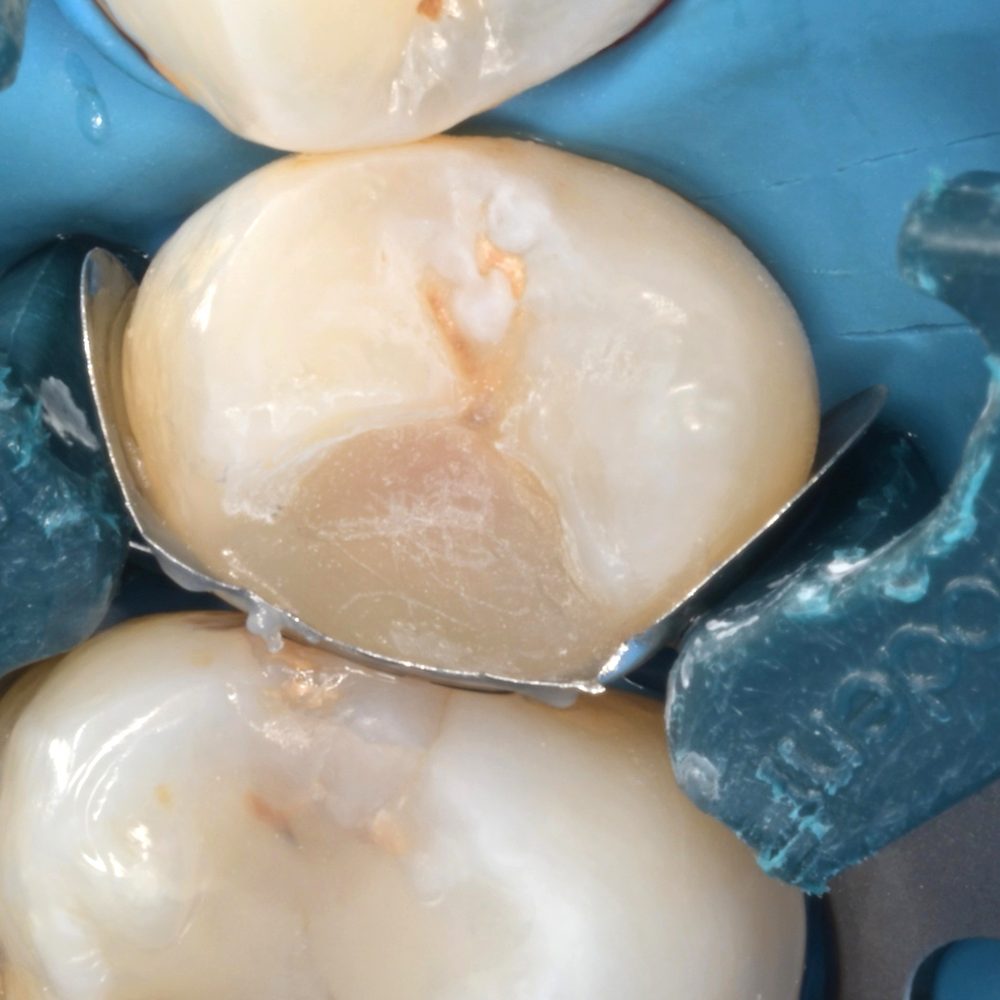
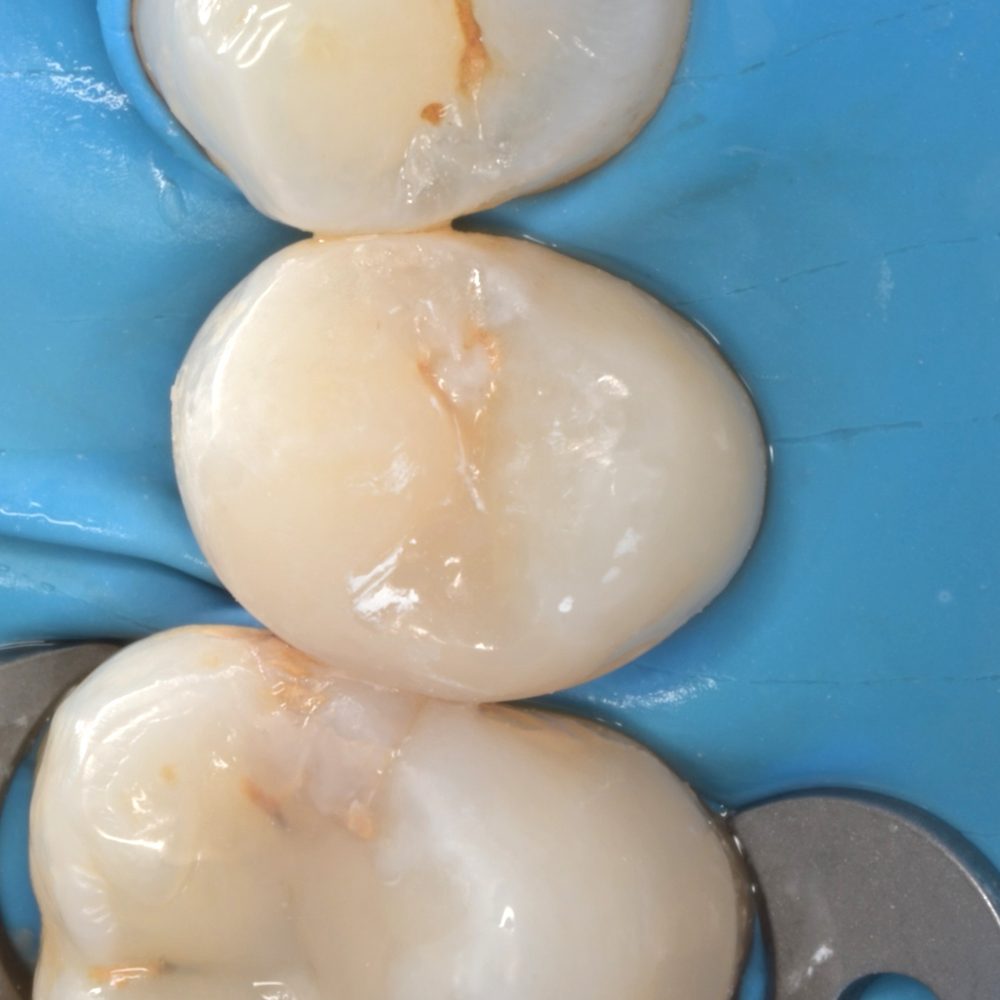
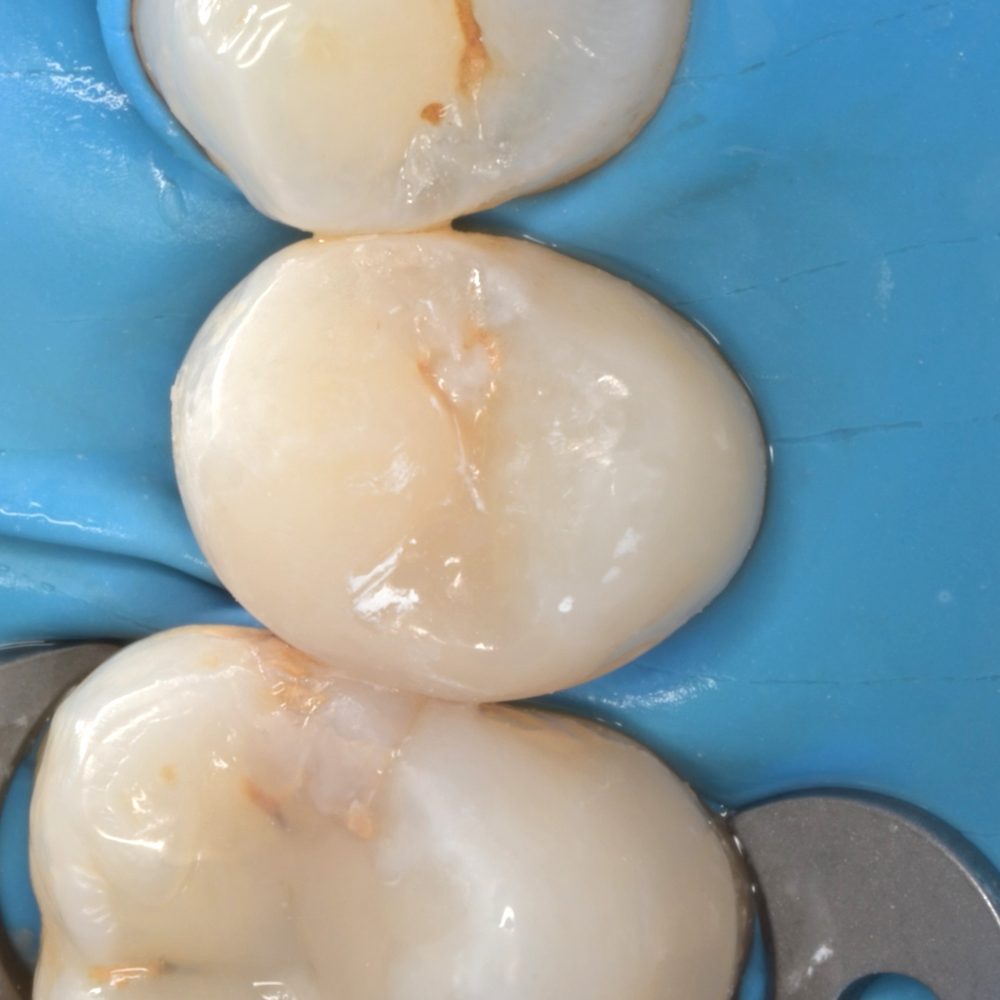
A recent case showed this well. A disto-occlusal carious lesion on an upper premolar. As usual, the lesion was far bigger than the X-ray suggested.
3. A deep cervical margin with little or no enamel
The gingival margin is often deep, sometimes subgingival, and there may be little or no enamel left to bond to. You’re relying on cervical dentine, which is relatively poor dentine, with collapsed tubules and little hydroxyapatite.
4. C-factor (configuration factor) – referring to the ratio of bonded to unbonded surfaces in a cavity
Composite is going to shrink, no matter what we do. The question is where it shrinks towards, and away from.
In a plate shaped cavity (low C-factor), the composite can shrink towards the surface it’s bonded to – ideal! In a cup shape (high C-factor), aka a class II box, the composite tries to pull away from the walls it’s bonded to. This shrinkage stress affects either the developing hybrid layer, or the cavity walls.
Bicalho et al. (2014) found bond strengths drop significantly in high C-factor cavities unless the stress is managed, and a further 10% is lost once occlusal load is added.
5. The cusps are too far away to help
One more consideration (and not everyone will realise this).
When composite shrinks near the occlusal surface, the cusps flex inwards a little and absorb some of the stress.
Deep in the box, the cusps are too distant to compensate with a little flexing. The gingival floor and cervical walls are rigid so the stress affects the bond, at the weakest bonding site in the tooth.
6. Different parts of the tooth bond differently
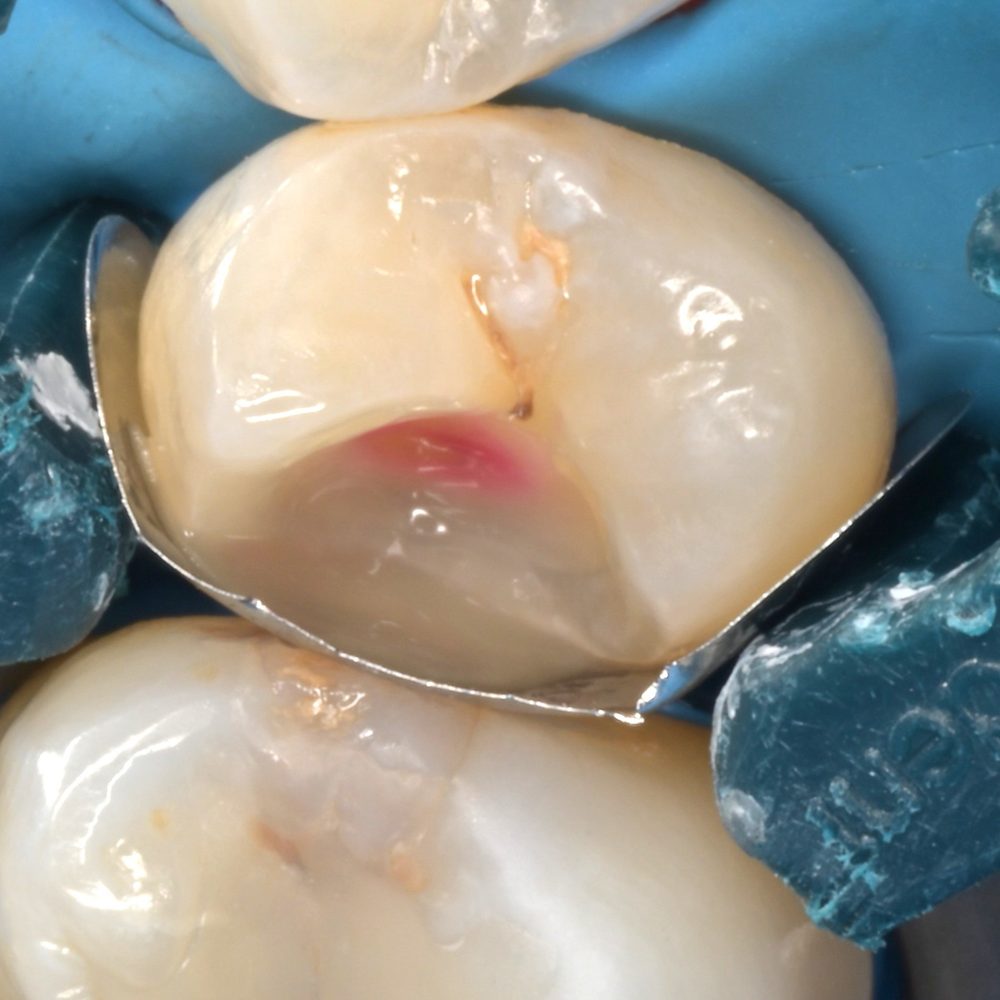
The enamel bond gets strong very quickly – enamel bonding is no problem! As the dentine bond takes more time to mature, if the composite is connecting the two together, the enamel will ‘pull’ the shrinking composite away from the dentine. That’s why we never connect different substrates , or both proximal walls at the same time.
7. The contact point
Then there’s the contact point to rebuild. You need enough proximal depth to create a proper contact, the right matrix for the situation, flared proximal walls (for optimal enamel bonding) and a smooth transition at the peripheral rim.
Get these steps wrong and you’ll risk food packing.
8. The aesthetic zone
Premolars, and often the mesial of the first molar, can be visible to some patients (I call that the P-factor). So the restoration has to look right as well as work: shade, translucency and the shape of the marginal ridge are all important.
9. Enamel morphology
The least said about enamel morphology, the better (but that is just me). I’ll stop there, but I do admire the beautiful Instagram images of highly polished, like-for-like enamel morphology. Mine is OKAY…. but I can rest assured that it’s the dentine bond that is the most important thing.
10. The cavity has already weakened the tooth
Magne and Oganesyan (2009) used finite element analysis on premolars under a 150 N load. The cusps of an intact tooth widened by 2.7 µm. With an MO cavity, 5.0 µm. With an MOD, 179.4 µm. At least when we restore the tooth with an optimally bonded composite, it restores the almost virgin tooth function. Restored with optimally bonded composite, the MOD came back to 6.9 µm.
So a ‘simple’ class II with a wide isthmus in a flexing tooth. Be aware of the cracks!
So what?
This info is not intended to make you worried about doing a class II restoration. It’s just to give you some awareness of the potential issues and recognise the complexities. I would recommend booking enough time and follow a protocol that mitigates all of these challenges.
At The Gentle Touch, all clinicians arrange a 1hr 15 minute appointments for class II restorations and we charge appropriately.
Any questions, please get in touch.
Amber