Home // News // Why is the straightforward-looking tooth the hard one?
// News

Why is the straightforward-looking tooth the hard one?

5th November 2026 // by Amber Aplin

In my experience, the straightforward-looking teeth planned for onlays are often more complex than a tooth that is very badly damaged. With a shot tooth, the cusps are usually fractured or too thin to retain. With a tooth that looks fine, once all the pathology is removed, you are deciding what to do with every cusp.

This is a patients asymptomatic, structurally weak 46, step by step, with what I was thinking at each stage.

Before we started

On an initial assessment, it looks like a routine treatment. The occlusal image shows the opposing tooth contacting mesially and distally on the 46.

1. Rubber dam on
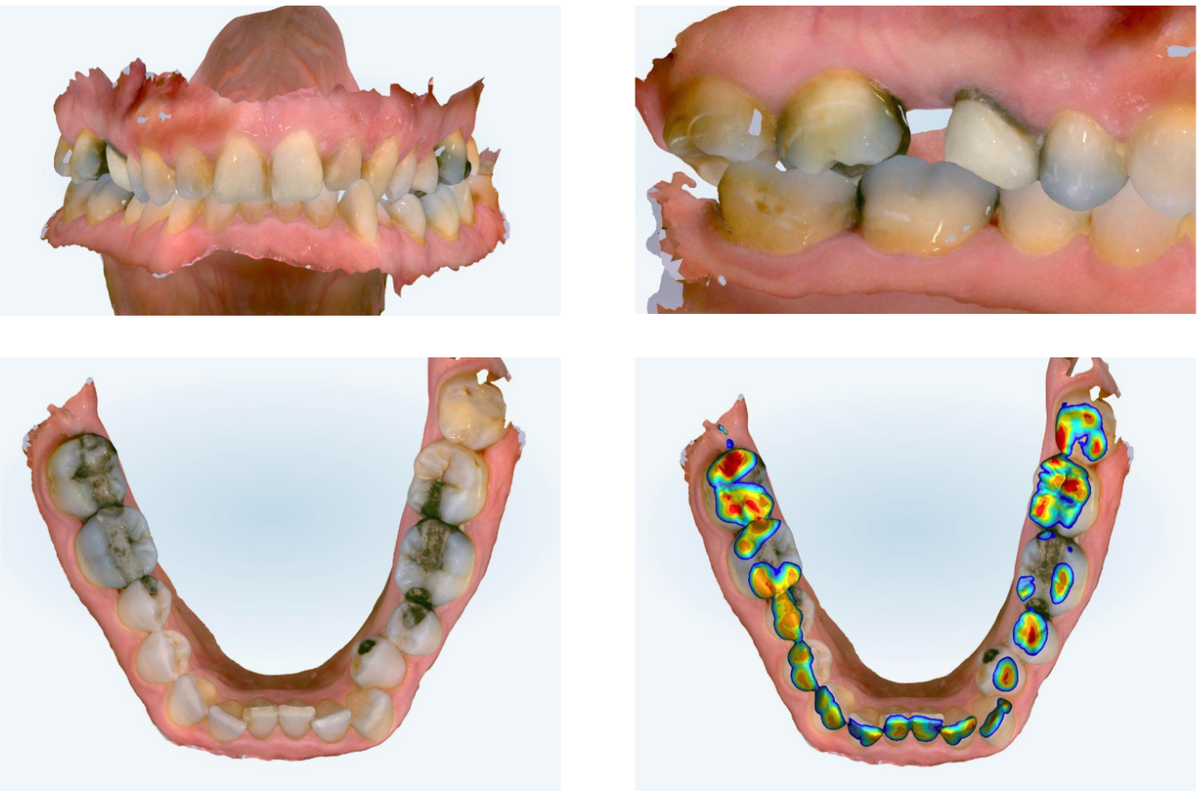
3D scan of anterior view, up close occlusion, mandibular arch view and then with the occlusal load.

An MOD amalgam with all the cusps present. On the scan, it looks like a routine replacement. The occlusal image shows the occlusion contacting mesially and distally on this tooth.

1. Rubber dam on
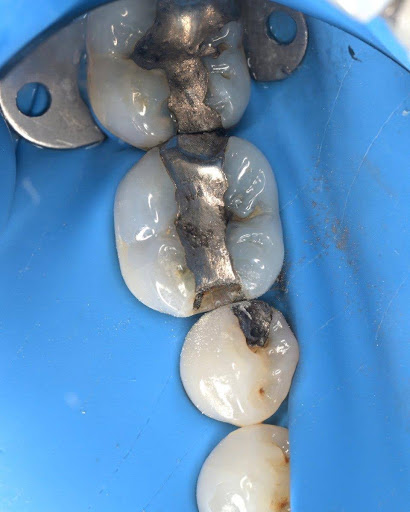

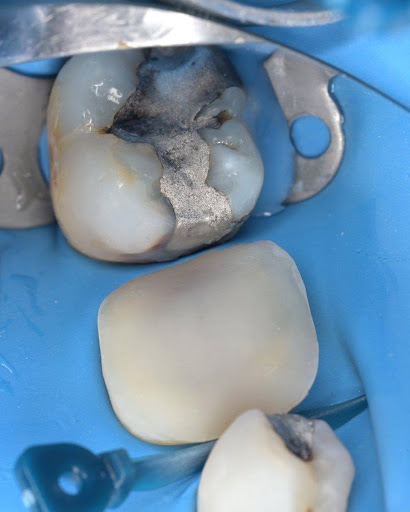
The contacts were very tight, so I had already removed a little of the existing amalgam from the mesial and distal boxes to make the rubber dam placement easier.

2. Amalgam out, caries detector dye straight on
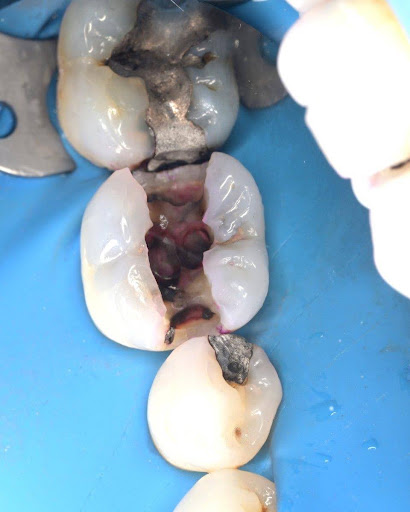
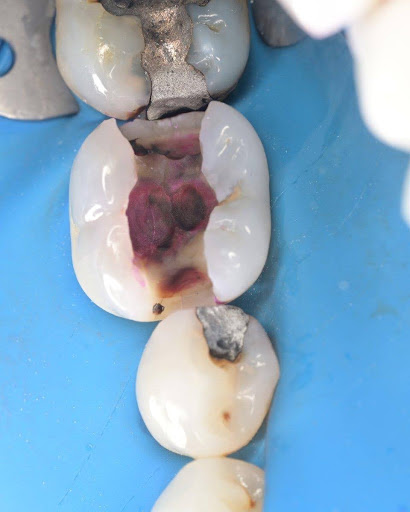
3. Decision one: the buccal cusps
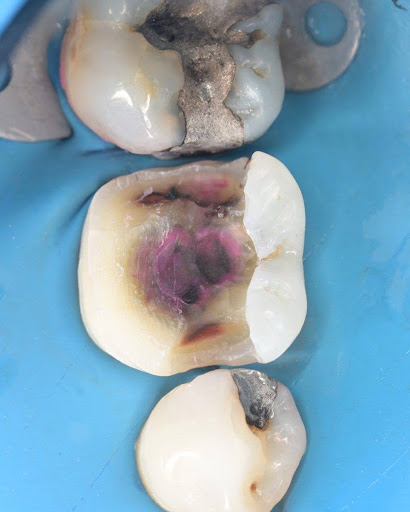
The buccal cusps had to be overlayed because of how much caries was undermining them.
I didn’t know enough about the lingual cusps at this stage. We aim to keep them if possible.
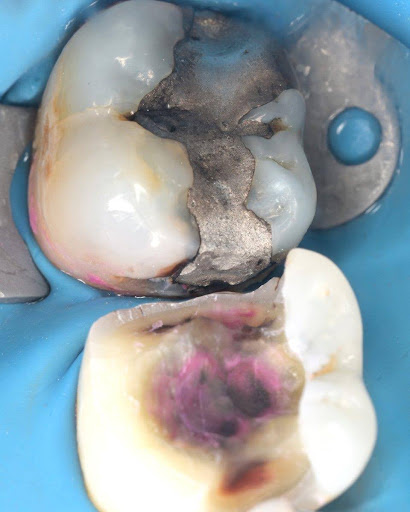
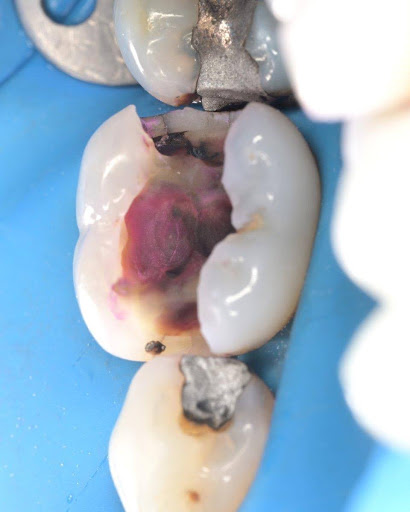
A closer, angled view of the same stage. It also shows mesial caries on the 47. We did a composite repair on that to extend its life a little longer. This patient wants to treat one tooth at a time.

4. Caries to its end-points
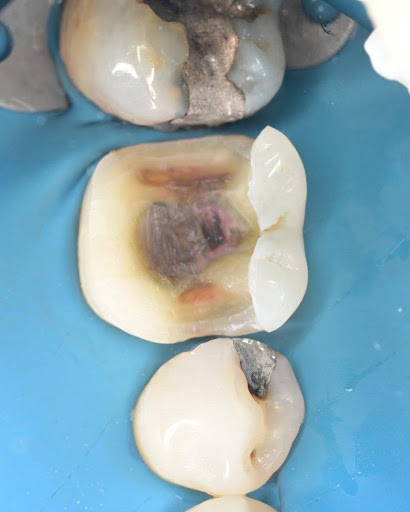
The caries is now removed to its end-points. At this point, I was still planning to keep the lingual cusps.

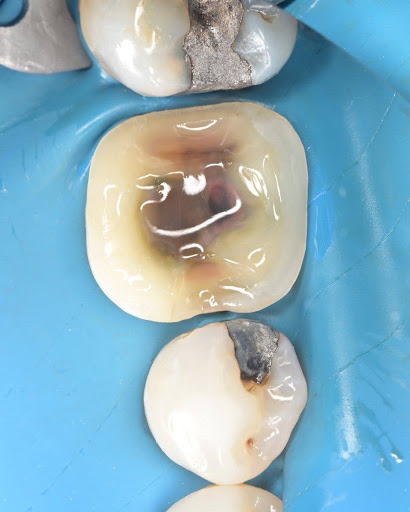
5. Decision two: the lingual cusps
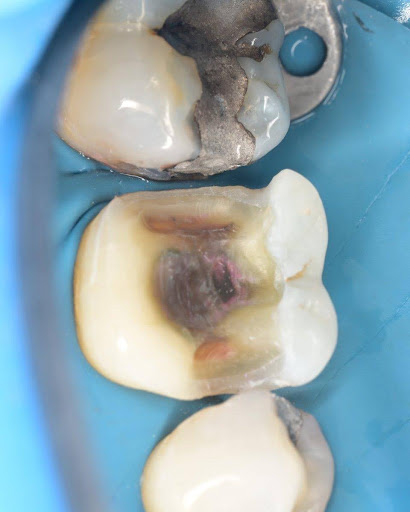
This angled view shows how undermined the lingual cusps were once all the caries had gone. They were too thin to keep, under 2 mm at the base.

They are also this patient’s guidance cusps. Even with the occlusion contacting mesially and distally (see the iTero scans), thin guidance cusps, less than 2mm at the base are best overlaid.

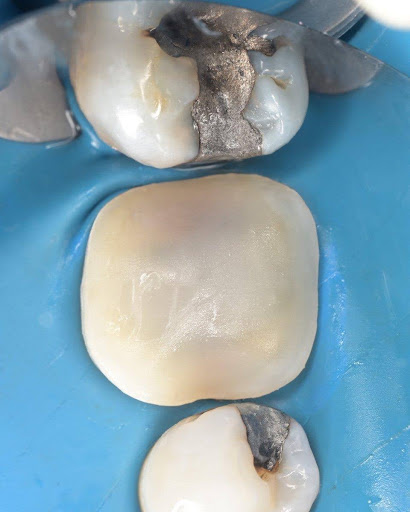
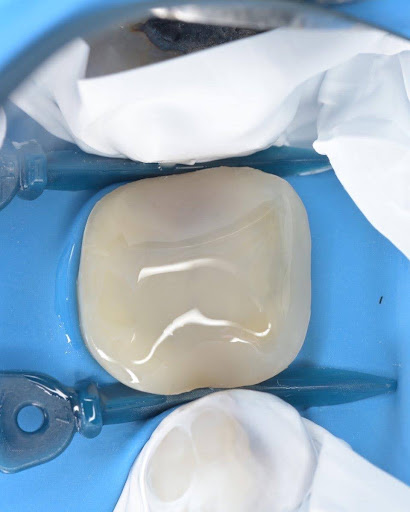
6. Sealing and the biobase
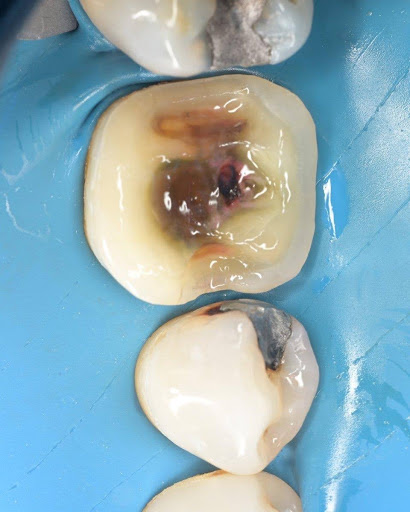
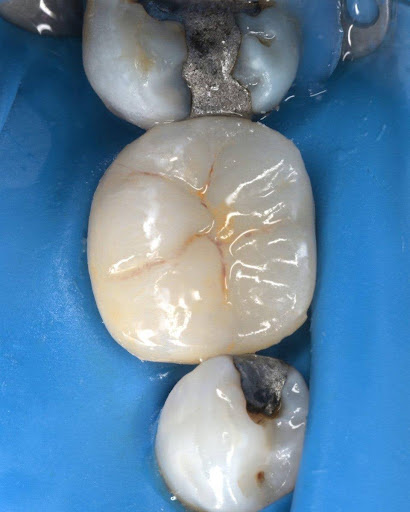
7. The fit appointment
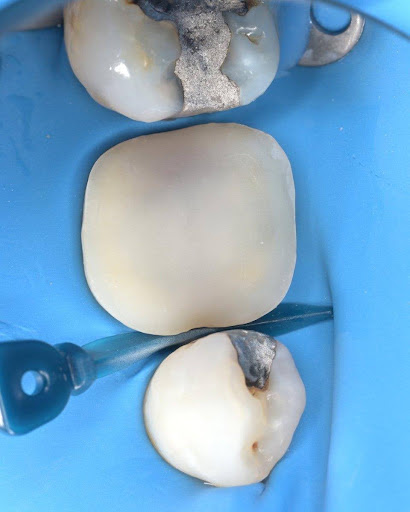
The overlay fitted.

Question for you:

Would you like to have more of these high value, enjoyable and predictable treatments in your diary?

If so, get in touch.

Thanks,

Amber.

Amber Aplin

About Amber

Dr Amber Aplin is a dentist, educator, and founder of The Gentle Touch in Kelso, Scotland. She teaches biomimetic dentistry and therapist-led care to practices across the UK.

Read Amber's full story

You may also like

Stay close to the conversation

Amber writes The Bulletin, a fortnightly update on biomimetic dentistry, therapist-led care and practice transformation. Subscribe and receive a free download: Amber's framework for working through a whole mouth of restored teeth. Which to treat, in what order, and what to recommend for each.

Please select all the ways you would like to hear from Amber Aplin Dental:

You can unsubscribe at any time by clicking the link in the footer of our emails. For information about our privacy practices, please visit our website.

We use Mailchimp as our marketing platform. By clicking below to subscribe, you acknowledge that your information will be transferred to Mailchimp for processing. Learn more about Mailchimp's privacy practices.

This website uses cookies
This site uses cookies to enhance your browsing experience. We use necessary cookies to make sure that our website works. We’d also like to set analytics cookies that help us make improvements by measuring how you use the site. By clicking “Allow All”, you agree to the storing of cookies on your device to enhance site navigation, analyse site usage, and assist in our marketing efforts.
These cookies are required for basic functionalities such as accessing secure areas of the website, remembering previous actions and facilitating the proper display of the website. Necessary cookies are often exempt from requiring user consent as they do not collect personal data and are crucial for the website to perform its core functions.
A “preferences” cookie is used to remember user preferences and settings on a website. These cookies enhance the user experience by allowing the website to remember choices such as language preferences, font size, layout customization, and other similar settings. Preference cookies are not strictly necessary for the basic functioning of the website but contribute to a more personalised and convenient browsing experience for users.
A “statistics” cookie typically refers to cookies that are used to collect anonymous data about how visitors interact with a website. These cookies help website owners understand how users navigate their site, which pages are most frequently visited, how long users spend on each page, and similar metrics. The data collected by statistics cookies is aggregated and anonymized, meaning it does not contain personally identifiable information (PII).
Marketing cookies are used to track user behaviour across websites, allowing advertisers to deliver targeted advertisements based on the user’s interests and preferences. These cookies collect data such as browsing history and interactions with ads to create user profiles. While essential for effective online advertising, obtaining user consent is crucial to comply with privacy regulations.