Home // News // Why can a badly-damaged tooth be easier to treat?
// News

Why can a badly-damaged tooth be easier to treat?

20th November 2026 // by Amber Aplin

In my last case, a straightforward-looking 46 turned into a cusp-by-cusp decision. You can read it here.

This one is the opposite. This tooth was so badly damaged that the plan was simply to remove all the pathology where it was safe to do so, i.e. avoiding perforating through to the pulp, or the PDL.

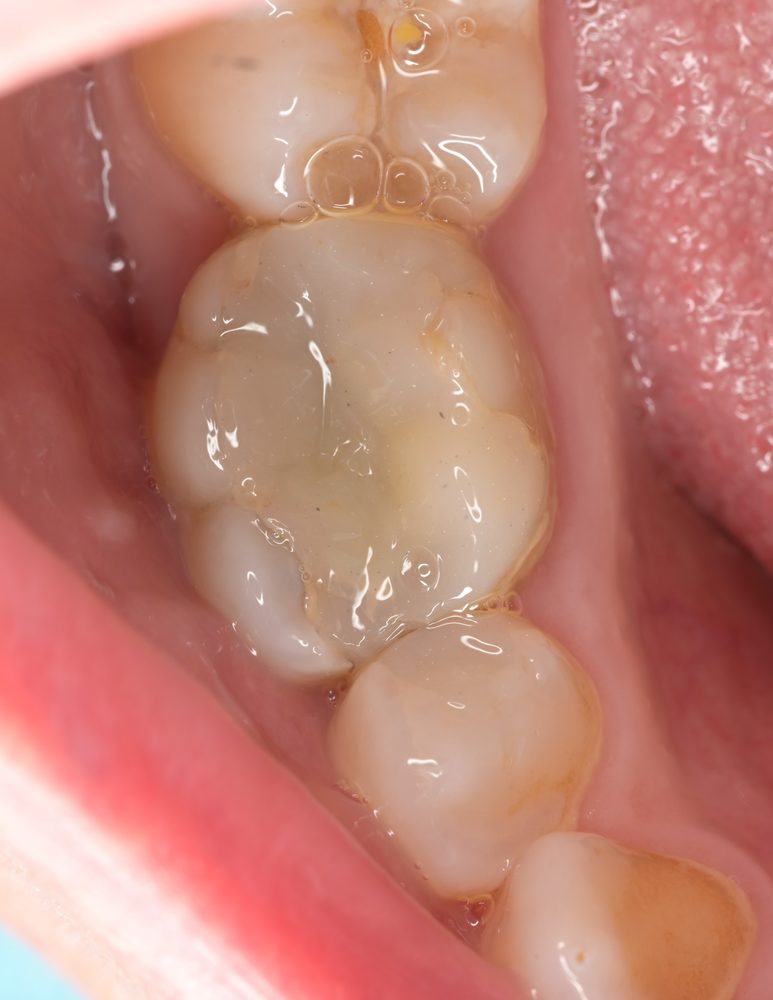
The lower right first molar (46) before we started
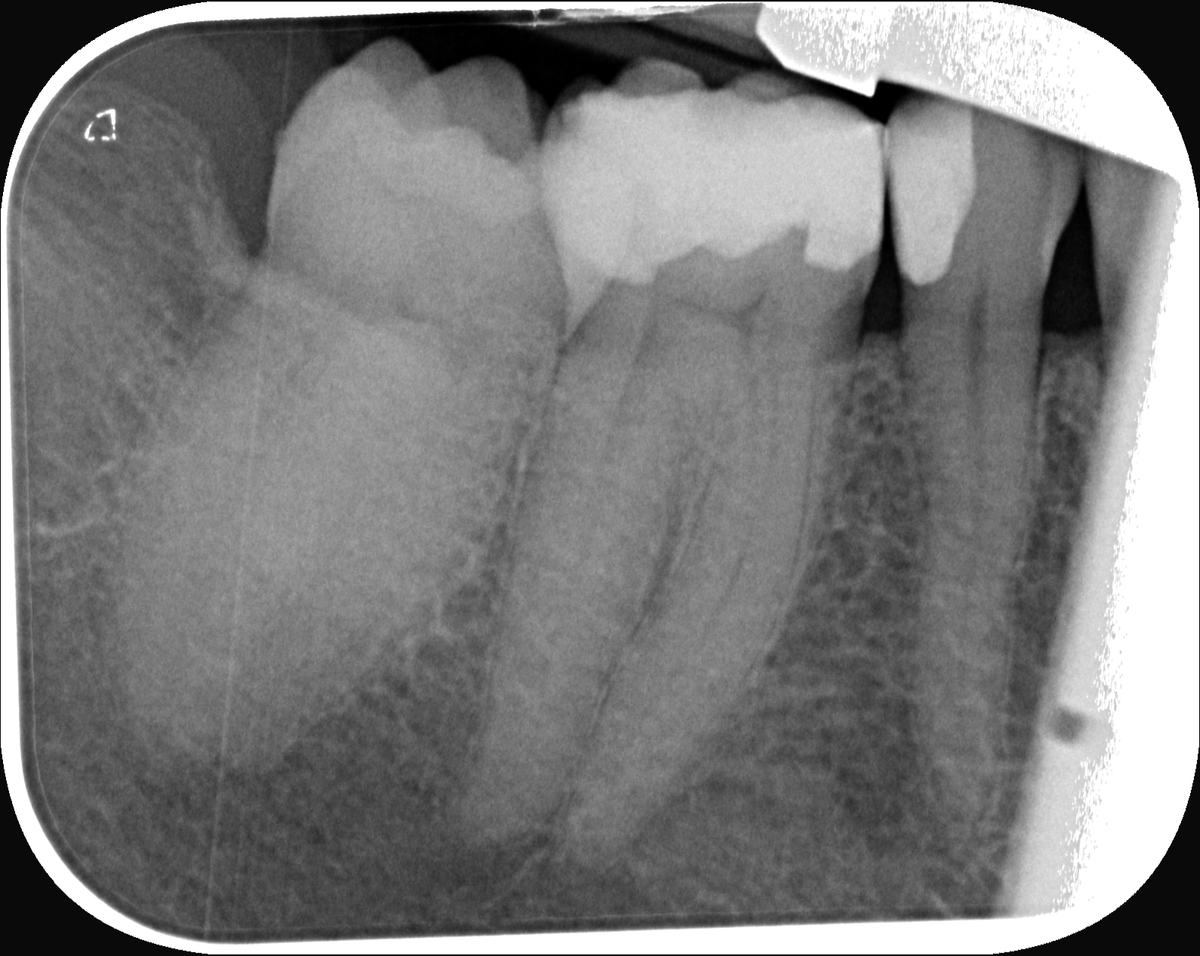
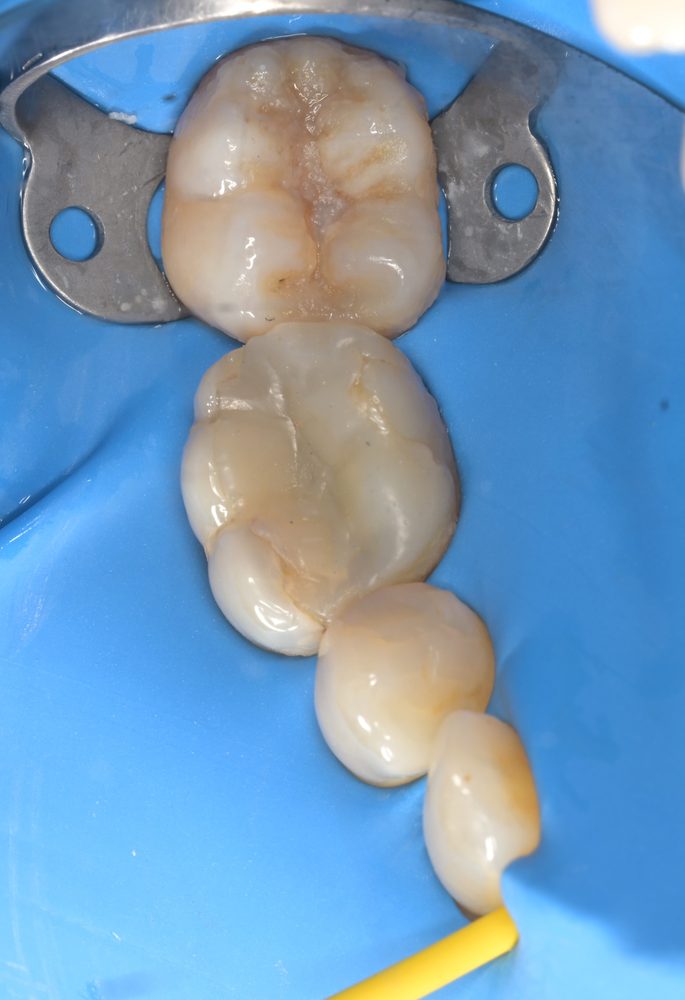
This tooth had a huge and old composite restoration. The bite was heavy on this tooth, and gaps were present between the composite and the tooth ‘occlusal abfraction’ . We planned an Emax overlay from the start.

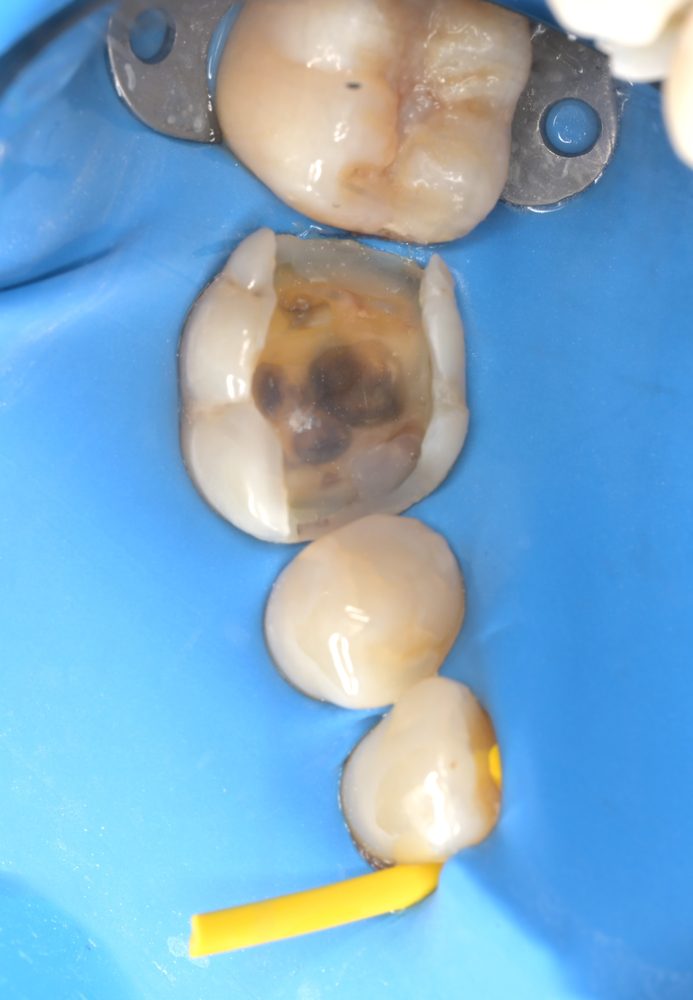
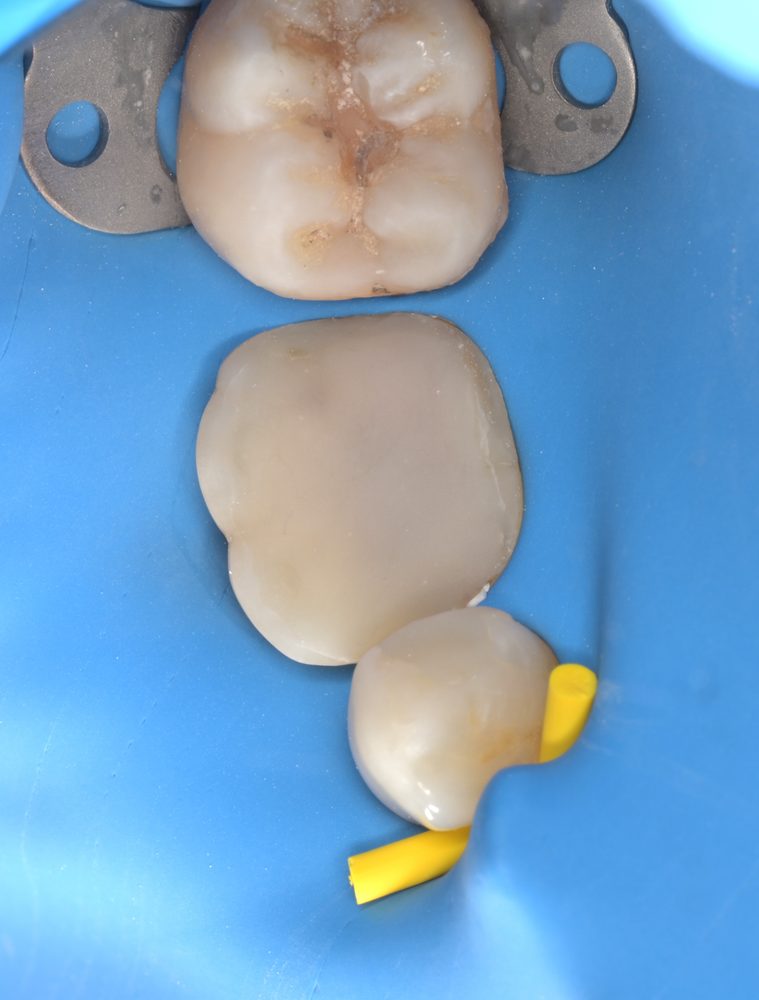
The old restoration is removed and the tooth assessed

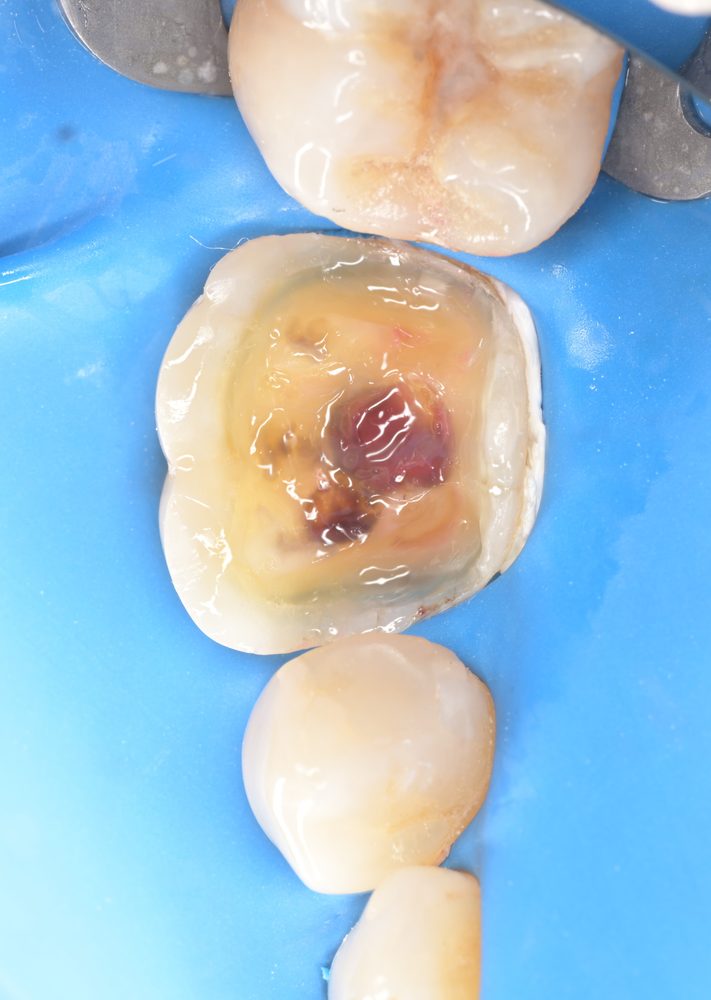
As anticipated, the remaining cusps were very thin and <2mm at the base; these were reduced straight away. The caries was close to the pulp and therefore left in situ – this is perfectly fine as long as the peripheral 2-3mm is caries free and an optimal seal is achieved.

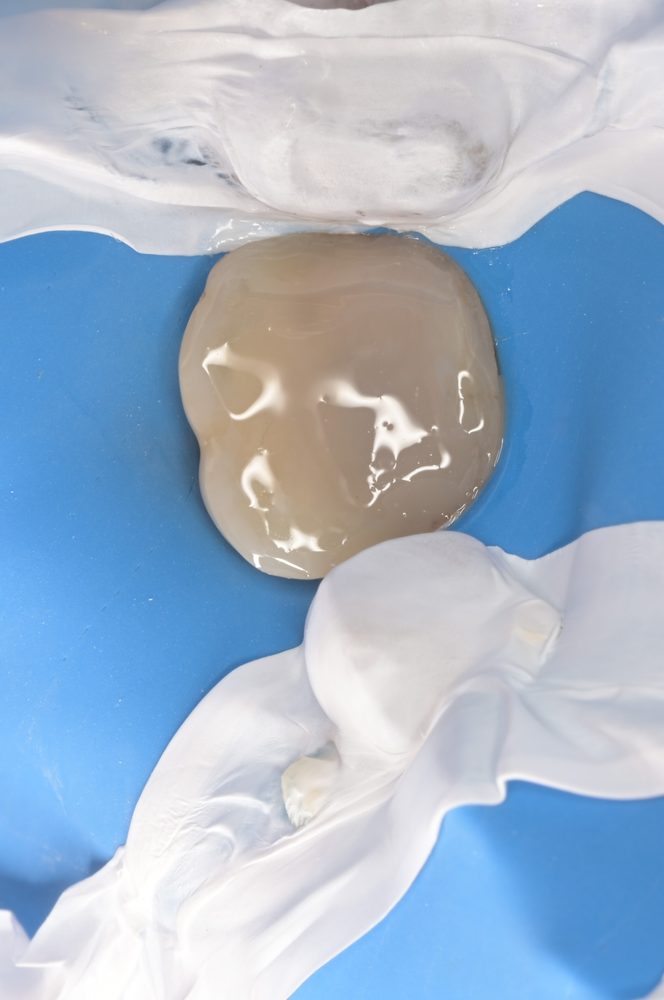
Next steps: the ‘biobase’

  • Air abrasion
  • Immediate dentine seal using SE Protect
  • Resin coating using Majesty Flow
  • Ribbond fiber over the deepest areas of the preparation, where the bond strength will be weakest.
  • Kuraray AP-X composite resin is the perfect dentine replacement.
  • A thin layer of Majesty Flow can make the surface lovely and smooth
  • Final light cure whilst the prep is coated with Glycerine.
  • Margin smoothing and finishing

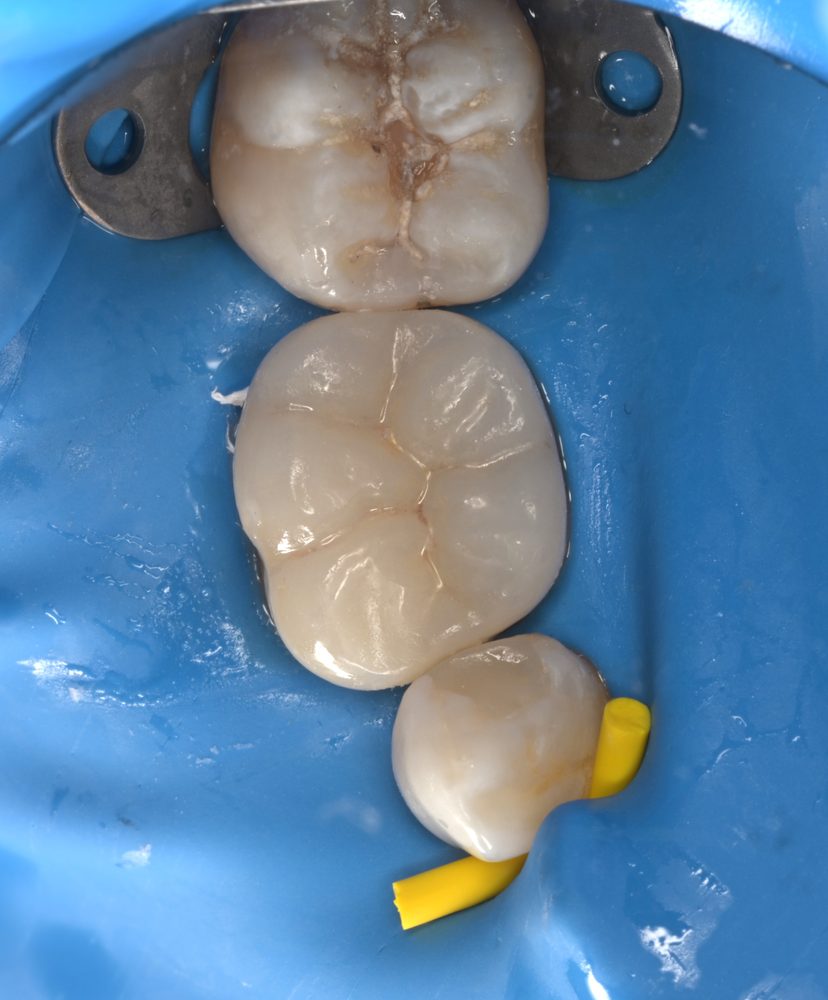
The fit appointment

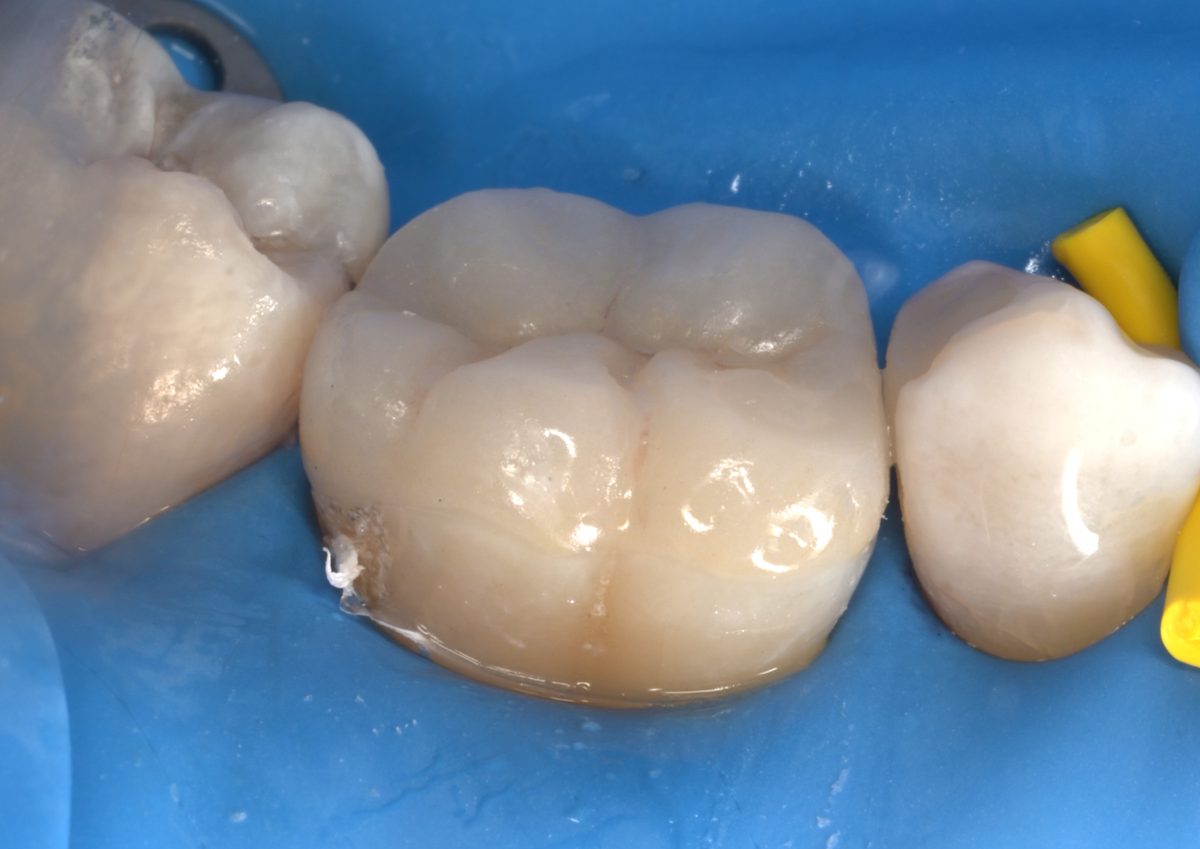
Treatment date

This was done in October 2025, and it’s been trouble-free since. It’s a restoration designed to last.

Want to learn how to plan and treat cases like this?

There are three places left on our January course here.

Any questions? Get in touch! Thanks, Amber.

Amber Aplin

About Amber

Dr Amber Aplin is a dentist, educator, and founder of The Gentle Touch in Kelso, Scotland. She teaches biomimetic dentistry and therapist-led care to practices across the UK.

Read Amber's full story

You may also like

Stay close to the conversation

Amber writes The Bulletin, a fortnightly update on biomimetic dentistry, therapist-led care and practice transformation. Subscribe and receive a free download: Amber's framework for working through a whole mouth of restored teeth. Which to treat, in what order, and what to recommend for each.

Please select all the ways you would like to hear from Amber Aplin Dental:

You can unsubscribe at any time by clicking the link in the footer of our emails. For information about our privacy practices, please visit our website.

We use Mailchimp as our marketing platform. By clicking below to subscribe, you acknowledge that your information will be transferred to Mailchimp for processing. Learn more about Mailchimp's privacy practices.

This website uses cookies
This site uses cookies to enhance your browsing experience. We use necessary cookies to make sure that our website works. We’d also like to set analytics cookies that help us make improvements by measuring how you use the site. By clicking “Allow All”, you agree to the storing of cookies on your device to enhance site navigation, analyse site usage, and assist in our marketing efforts.
These cookies are required for basic functionalities such as accessing secure areas of the website, remembering previous actions and facilitating the proper display of the website. Necessary cookies are often exempt from requiring user consent as they do not collect personal data and are crucial for the website to perform its core functions.
A “preferences” cookie is used to remember user preferences and settings on a website. These cookies enhance the user experience by allowing the website to remember choices such as language preferences, font size, layout customization, and other similar settings. Preference cookies are not strictly necessary for the basic functioning of the website but contribute to a more personalised and convenient browsing experience for users.
A “statistics” cookie typically refers to cookies that are used to collect anonymous data about how visitors interact with a website. These cookies help website owners understand how users navigate their site, which pages are most frequently visited, how long users spend on each page, and similar metrics. The data collected by statistics cookies is aggregated and anonymized, meaning it does not contain personally identifiable information (PII).
Marketing cookies are used to track user behaviour across websites, allowing advertisers to deliver targeted advertisements based on the user’s interests and preferences. These cookies collect data such as browsing history and interactions with ads to create user profiles. While essential for effective online advertising, obtaining user consent is crucial to comply with privacy regulations.