
// Amber Aplin
Which tooth first
A framework for working through a whole mouth of restored teeth. Which to treat, in what order, and what to recommend for each. Free to download.
Straight to your inbox, no charge.
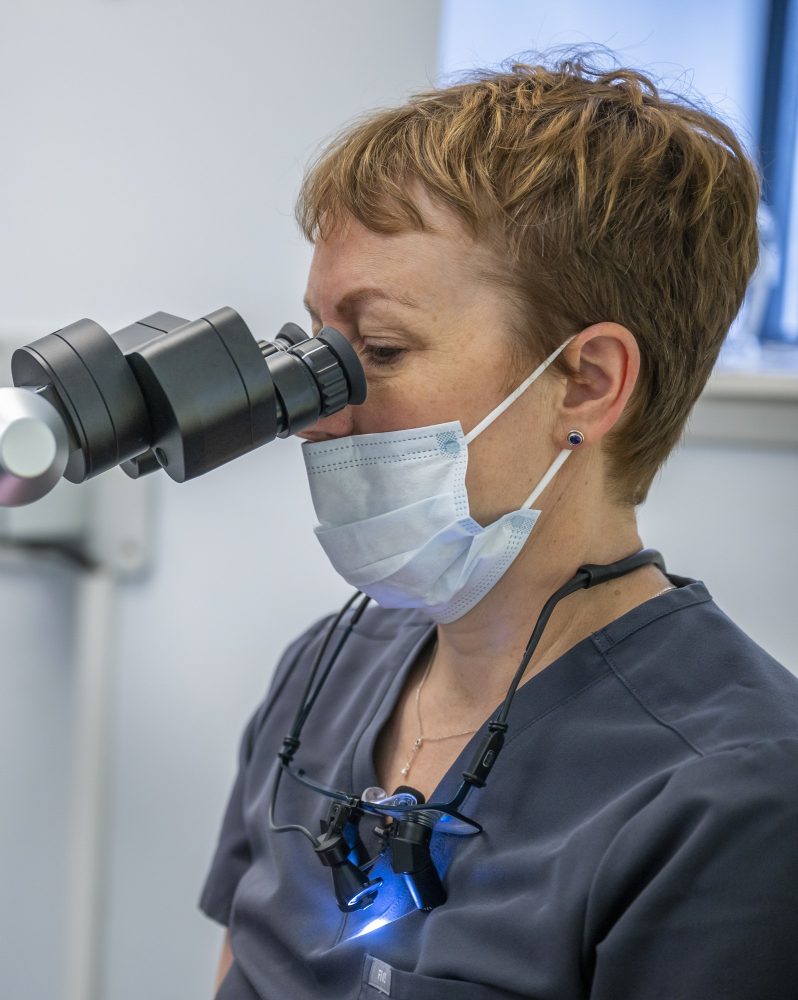
The Problem
A patient sits down with a mouth full of old restorations.
Six large amalgams, two of them fifteen years old, a couple of tired composites and a marginal ridge with a hairline crack running through it. Nothing hurts. Nothing is obviously failing. Everything will need something eventually.
So which one first?
You answer from the evidence, and also 28 years of experience. This framework turns that judgement into a sequence. Every restored tooth in the mouth is assessed the same way, using four structural red flags and then occlusal load. What comes out is a risk ranking for the whole mouth, which is the order you treat in. Same assessment, every patient, recorded in the notes.
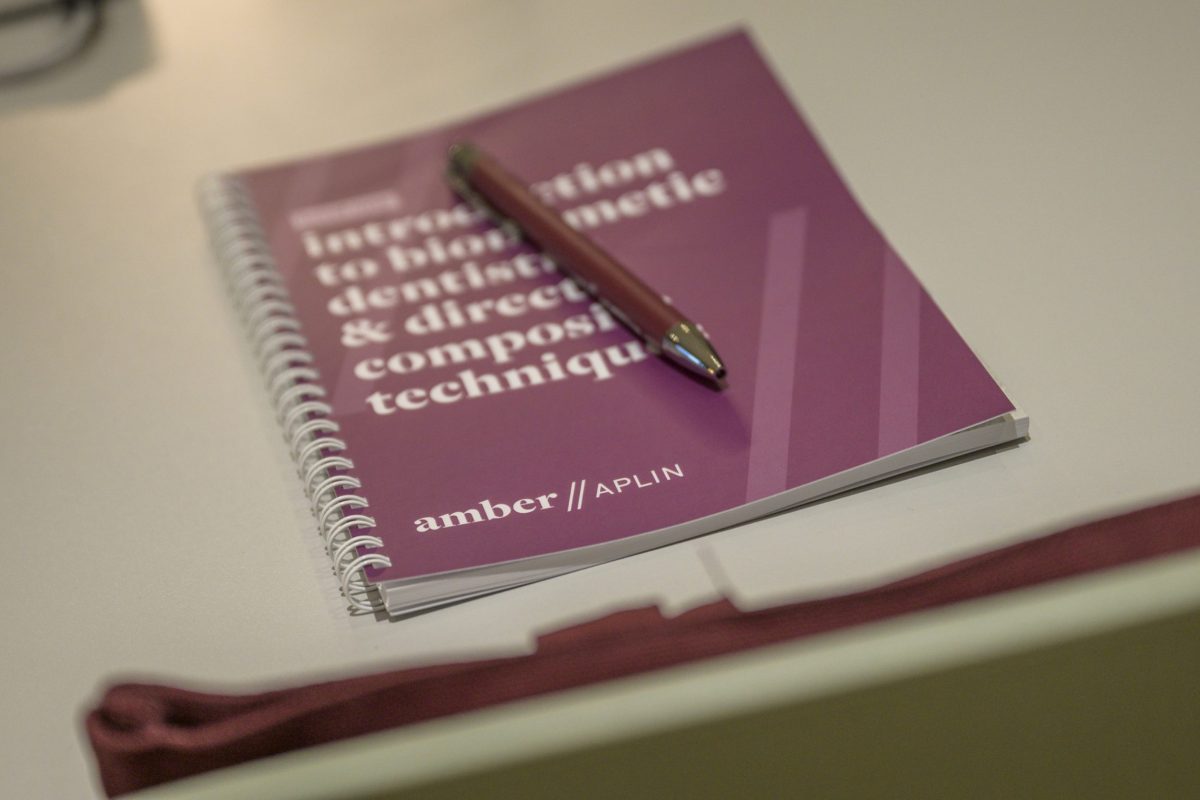
Who is it for
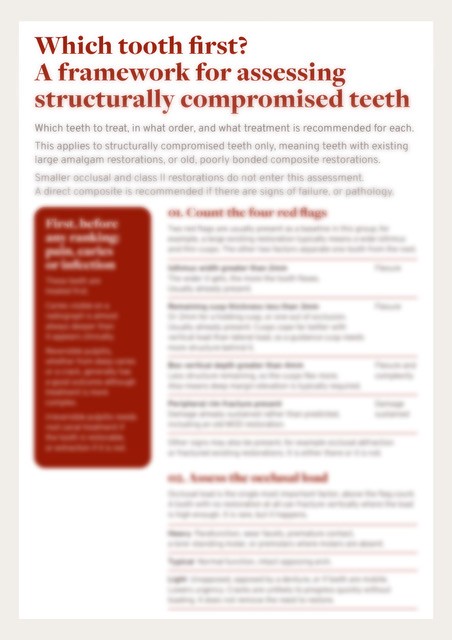
- What comes before any ranking at all. Pain, caries and infection are dealt with first, and the chart sets out how each is handled.
- Which teeth enter the ranking. Large existing amalgams and old, poorly bonded composites are assessed. Smaller occlusal and class II restorations are not, and the chart says what to do with those instead.
- The four red flags, with the threshold for each and the reason it matters, whether that is flexure, complexity or damage already sustained.
- Why occlusal load outranks the flag count, and how heavy, typical and light loading are defined.
- How flags and load combine into high, moderate and lower risk for each tooth, giving you a treatment order across the whole mouth rather than a list of problems.
- The two reasons to go indirect, protection and reconstruction, either of which is enough on its own. Also where semi-direct fits and where it does not.
- When predictability is genuinely in doubt, including the one combination worth referring, and the patient factors that decide what is achievable.
One assessment, run across the whole mouth, for every patient. It takes a few minutes and it is recorded once.
What comes with it
The Bulletin goes out every other Thursday to dentists and dental therapists across the UK. It is short, clinical, and written by me rather than by a marketing team.
- Real cases from the practice, including the ones that did not go to plan.
- The evidence behind the decisions, in plain terms.
- Course dates before they are made public, with priority booking. Places are limited to ten a course and they have sold out.
If it stops being useful, one click removes you.
About Amber
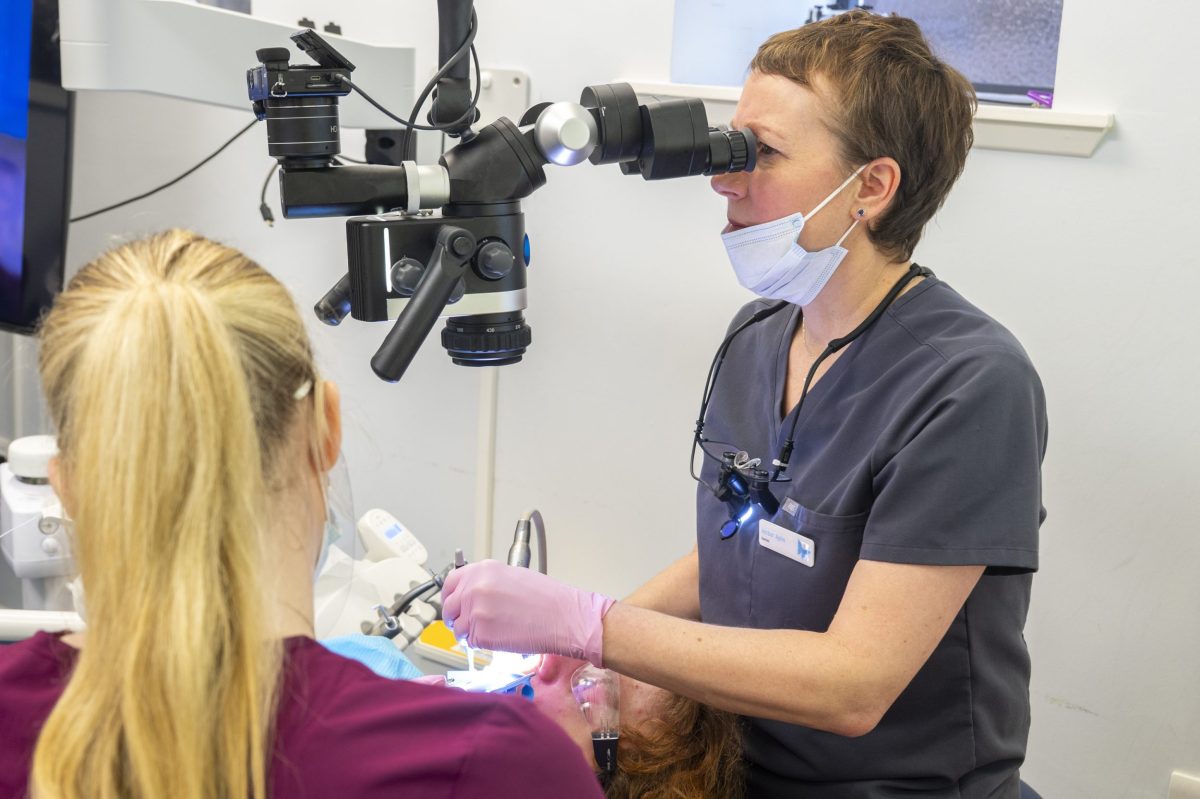
I am Amber Aplin, principal of The Gentle Touch in Kelso, the world’s largest fully biomimetic dental practice and the only fully private therapist-led practice in the UK. I studied biomimetic restorative dentistry with David and Davey Alleman in Utah, and completed their Mastership.
I teach biomimetic restorative care and therapist-led care from The Corn Exchange, the education centre next door to the practice. This framework is the part of that teaching I am asked about most often, so here it is.